Under the title ‘A new pact for a sustainable Mediterranean future’, the forum brought together policymakers, researchers, SMEs, private sector representatives and civil society organisations from across the Mediterranean region. The opening of the Circle the Med Forum featured high-level speeches from George Papandreou, former Prime Minister of Greece and President of Circle the Med, and H.E. Constantine An. Tassoulas, President of the Hellenic Republic, alongside other institutional representatives and Mediterranean actors.Sergio Ponsa Salas, director at BETA Technological Centre, and Roger Garcia i Noguera, director of MedWaves, also represented the ISE Mission during the opening day of the Cirlce the Med Forum.
The ISE Mission hosted two of its main annual gatherings within Circle the Med: the MED Innovation Summit and the ISE Community of Practice (CoP). These two days of community gathering created a space for dialogue on the future of sustainable development across the Mediterranean region. The Greek partners of the ISE Mission, MIO-ECSDE and Dynamic Vision, led the organisation of the three-day forum.
Entrance of the Circle the Med 2026 venue. Photo: Emin Yiğit Koyuncuoğlu/REVOLVE
Exploring new models for sustainable systems
The second day of the Circle the Med Forum was dedicated to the MED Innovation Summit, a key initiative of the ISE Mission to gather the community. “We need these kinds of spaces where people can meet each other to act as a bridge and connect businesses, products and SMEs with good practices”, underlined Prof. Yorgos Stephanedes, Em. Prof., University of Patras.
Maria Calderó Pascual, ISE Mission Thematic Community Project Coordinator at BETA Technological Centre and Alessandra Sensi, Head of Sector Environment, Green and Blue Economy, at the Union for the Mediterranean (UfM) Secretariat, opened the day, highlighting the importance of bridging gaps and connecting actors to advance towards a more sustainable and resilient region.
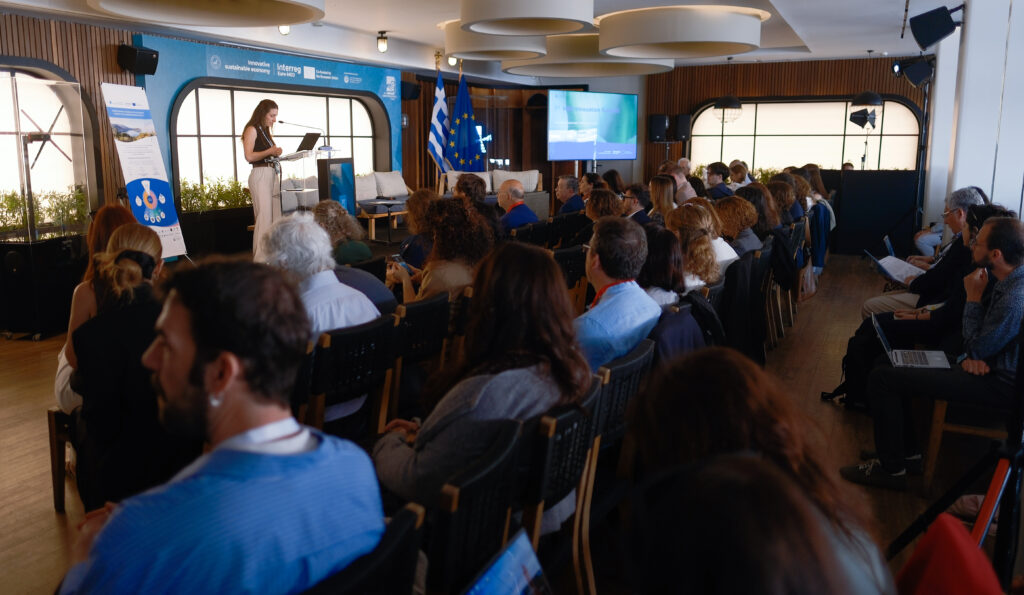
Maria Calderó Pascual opening the MED Innovation Summit. Photo: Emin Yiğit Koyuncuoğlu/REVOLVE
Guillaume Javourez, Project Officer and Academy Coordinator at the Interreg Euro-MED Joint Secretariat, followed with an introduction to the Interreg Euro-MED Academy, setting the scene for the thematic discussions that followed throughout the day.
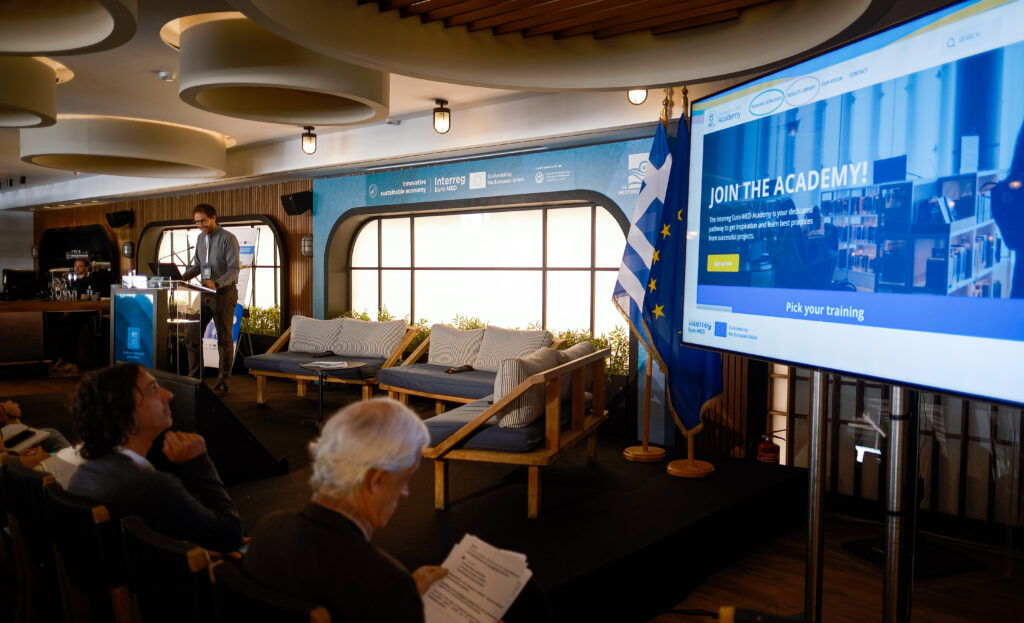
Guillaume Javourez presenting the Interreg Euro-MED Academy. Photo: Emin Yiğit Koyuncuoğlu/REVOLVE
Four panels followed across the day’s agenda, touching on key topics such as the bio-based sector, regional economies, and energy communities. All panels highlighted the work of the ISE Mission thematic projects (TPs). In particular, eleven TPs were spotlighted during the panels.
The opening panel examined how bio-based sectors can balance sustainability and competitiveness through innovation and governance. Speakers drew on direct experience from four ISE Mission TPs to explain how place-based approaches and cross-sector cooperation can support long-term sustainability transitions in Mediterranean territories. The TPs highlighted were CARBON FARMING MED, 2B-BLUE, AZA4ICE and BLUE ECOSYSTEM.
As José Manuel Antón, European Projects Office Manager, CNT at Marine Technology Centre and representative of 2B-BLUE, underlined, “we don’t talk about waste, we talk about byproducts that can be used and marketed within the circular economy”.
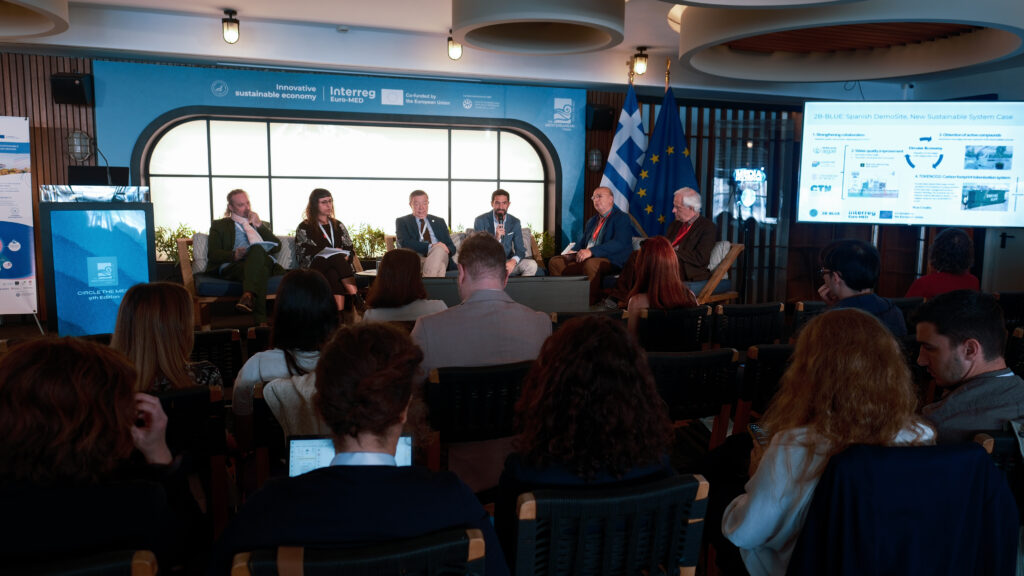
Speakers during the opening panel of the MED Innovation Summit. Photo: Emin Yiğit Koyuncuoğlu/REVOLVE
Climate resilience and regenerative economies
Climate adaptation and resilience remained central themes during the summit. The second panel, titled Beyond Mitigation and Adaptation for a Climate-Smart Resilient Mediterranean, focused on how evidence-based decision-making and foresight tools can help Mediterranean regions address increasingly complex climate impacts. This panel explored the full spectrum of tools available to address complex, cascading climate impacts, supporting resilient decision-making and coordinated action across institutions and territories. The session spotlighted the work of two ISE Mission TPs (SPOWIND and CLEPSYDRA) as well as two invited projects (MIRAMAR and DesirMED).
In the afternoon, discussions shifted towards regenerative and circular economic approaches during the session Economies of Regeneration: Redesigning Growth for a Sustainable Future. Speakers highlighted how innovation and cross-sector collaboration can redefine economic value and scale sustainable solutions for more resilient regional economies, with concrete examples from the ISE Mission TPs: ProcuraMED, GREENSMARTMED, CircleMED and eWasTER.
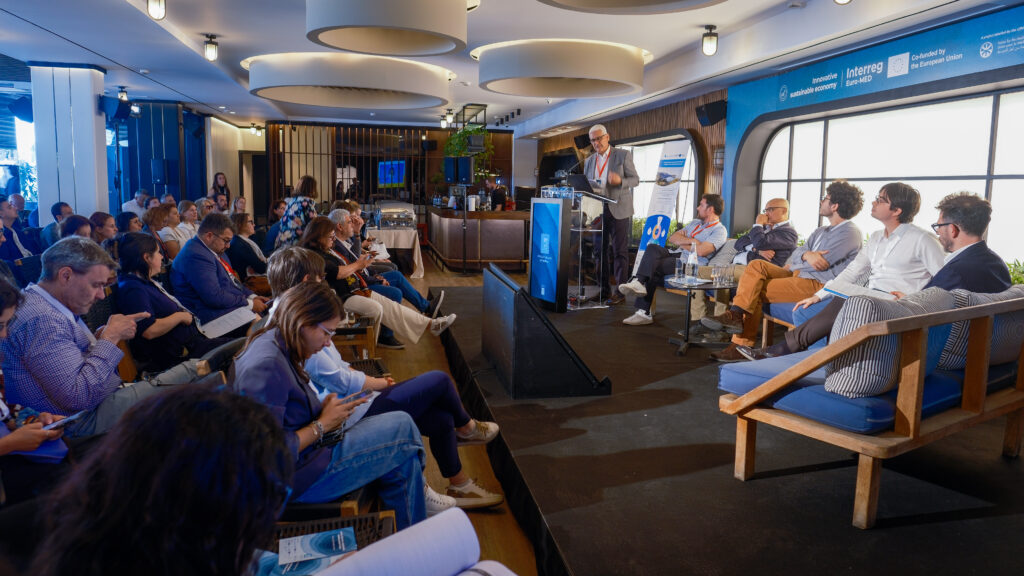
Fokion A. Zaimis during his keynote speech. Photo: Emin Yiğit Koyuncuoğlu/REVOLVE
Dialogue on energy and water communities
The day concluded with the institutional policy dialogue on Energy and Water Communities, led by the Interreg Euro-MED Green Living Areas (GLA) Mission. The session explored how experiences from energy communities can support the development of water communities and strengthen local governance models.
The session spotlighted the work of the Catalan cooperative of energy communities OECoop, with a presentation from its president, Ermen Llobet. The session also highlighted the work of the ISE Mission TP SHARE.MedWATER and the GLA TP WATERVILL.
The discussions highlighted the growing role of community-led governance in the green transition and the importance of collaborative approaches to energy and water management across the Mediterranean.
Community building and collaboration within the ISE Mission
The third day of the Circle the Med Forum hosted the ISE Community of Practice. The day was fully dedicated to deepening collaboration within the ISE Mission’s 23 Thematic Projects and two Governance Projects. With the Community at peak momentum, the day moved from working group sessions and peer-learning exchanges to a training on circular innovation policy and a closing panel on long-term collective impact.
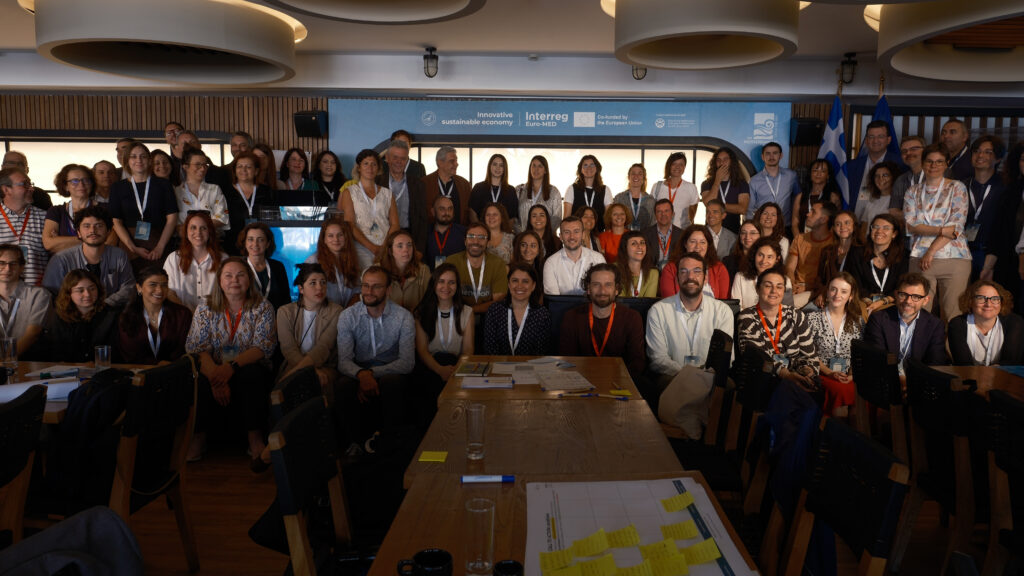
Group picture of the ISE Community. Photo: Emin Yiğit Koyuncuoğlu/REVOLVE
Participants had time to work collaboratively in thematic working groups to co-create and feed into the first versions of the Mission’s White Papers during the first session of the day.
The day was also a great opportunity to onboard new thematic projects within the Mission. They had the chance to present their projects during the Marketplace Village and also during the full two days through a poster exhibition.
Mentoring & Twinning Programme Testimonials
Current and new ISE Mission solution-takers and solution-givers shared first-hand accounts of their Mentoring & Twinning journey. Testimonials highlighted knowledge transfer across institutions, sectors, and borders, from olive oil cooperatives in Greece to circular economy hubs in Palestine. The mentoring tandems shared in groups their experiences, the added value of the programme and the plan ahead. The tandems were the following:
- Georges Youssef, CEO, Agrocedrus & Vasileios Siomadis, Preveza Chamber, OliveOilMedNet Project
- Tomaso Fortibuoni, Researcher, ISPRA & Chrysa Efstratiou, HCMR, BLUE ECOSYSTEM Project
- Olga Batran, Director, B-Hub of Birzeit University & Fabiana Pirola, University of Bergamo, GREENSMARTMED Project
- Konstantinos Papadakis, Co-founder, AgroID & Evdokia Balamou, Anetel, REVIVE Project
- Marion Kussmann, Chief Operations Officer, Confederation of Egyptian European Business Associations & Chrysovalantis Ketikidis, CERTH, VERDEinMED Project
- Béchir Béjaoui, Professor, National Institute of Marine Sciences and Technologies of Tunisia (online) & Ana Rotter, National Institute of Biology, 2B-BLUE Project
The session, led by Haris Paliogannis, Senior Policy and Programme Officer, MIO-ECSDE, also included a presentation by Najla Abdellatif Vallander, Founder & Creator, Zero Waste Palestine, a new participant to the programme, who shared her experience of finding a match within current ISE Mission TPs to start a collaboration.
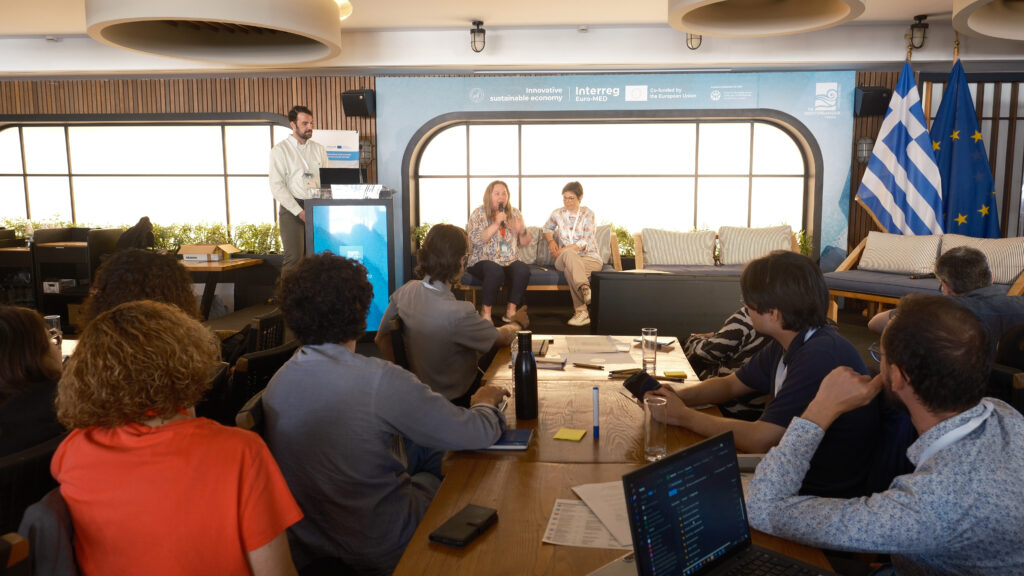
Olga Batran, Fabiana Pirola, and Haris Paliogannis on stage. Photo: Emin Yiğit Koyuncuoğlu/REVOLVE
As Olga Batran highlighted during her inspiring presentation, “behind every cooperation there is the human dimension, beyond deliverables or reports”. The session highlighted the human side of this collaboration and how this pairing opens doors on both sides.
Training on Regional Policies for Circular Innovation
Drawing on the European Circular Economy Innovation Valley (ECIV) methodology, a training session during the afternoon offered practical tools for translating circular economy strategies into regional action.
Case studies from Swedish regions (Värmland, Dalarna, Gävleborg) and Normandy illustrated how public administrations are mobilising decentralised funding and driving systemic change, providing a forward-looking lens on the upcoming Multiannual Financial Framework (2028–2034). The training was led by Zuzana Bohačová, project officer at ACR+.
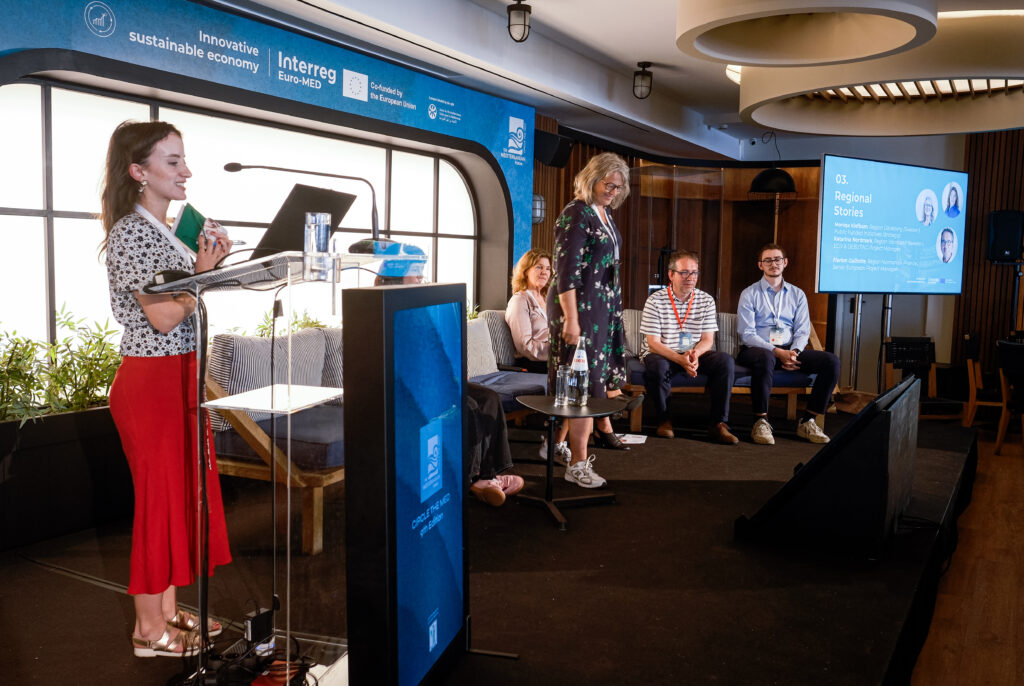
Zuzana Bohačová opening the training session. Photo: Emin Yiğit Koyuncuoğlu/REVOLVE
From fragmentation to collective impact
The gathering concluded with perspectives from the ISEC Hub members on what it takes to shift from scattered, project-by-project progress towards durable, systemic change. The panel discussion, moderated by Clara Casasnovas, Project Manager at BETA Technological Centre, highlighted young voices and emerging leaders from Egypt, Greece, France, Belgium and beyond who brought energy and urgency to the question of scaling solutions and strengthening the long-term effectiveness of the ISE Mission Community.
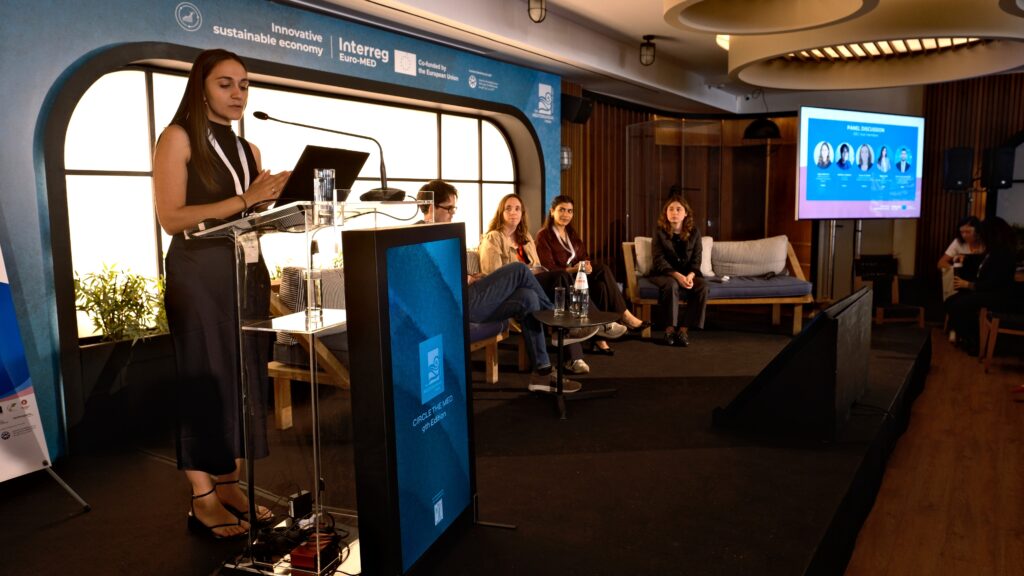
Clara Casasnovas moderating the final panel on Day 3. Photo: Emin Yiğit Koyuncuoğlu/REVOLVE
DesirMED exhibition showcases climate resilience through photography
Alongside the summit sessions, the DesirMED photo exhibition offered participants a visual journey through Mediterranean landscapes and communities working towards climate resilience.
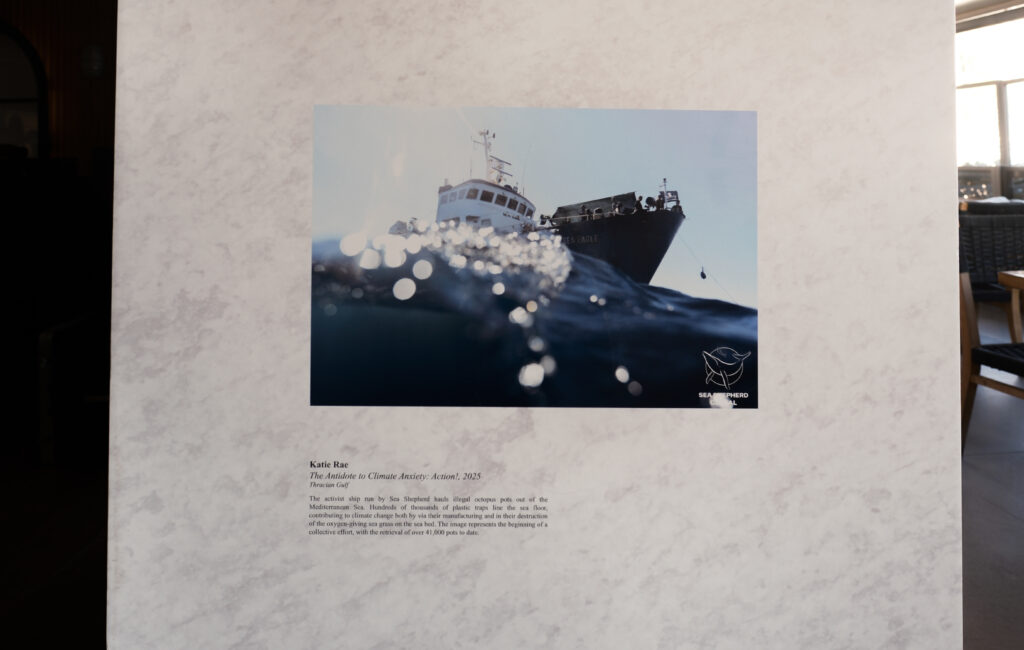
The DesirMED exhibition. Photo: Emin Yiğit Koyuncuoğlu/REVOLVE
The exhibition featured selected photographs from the DesirMED photo contest, capturing both individual and collective efforts to transform territories facing climate and environmental challenges.
Athens as a backdrop for Mediterranean exchange
Beyond the formal programme, the summit also created opportunities for informal exchange and networking among participants from across the Mediterranean region.
A cultural tour through Athens City Centre was organised, followed by a shared dinner featuring Greek cuisine, offering participants the opportunity to continue conversations and strengthen connections in a more informal setting.
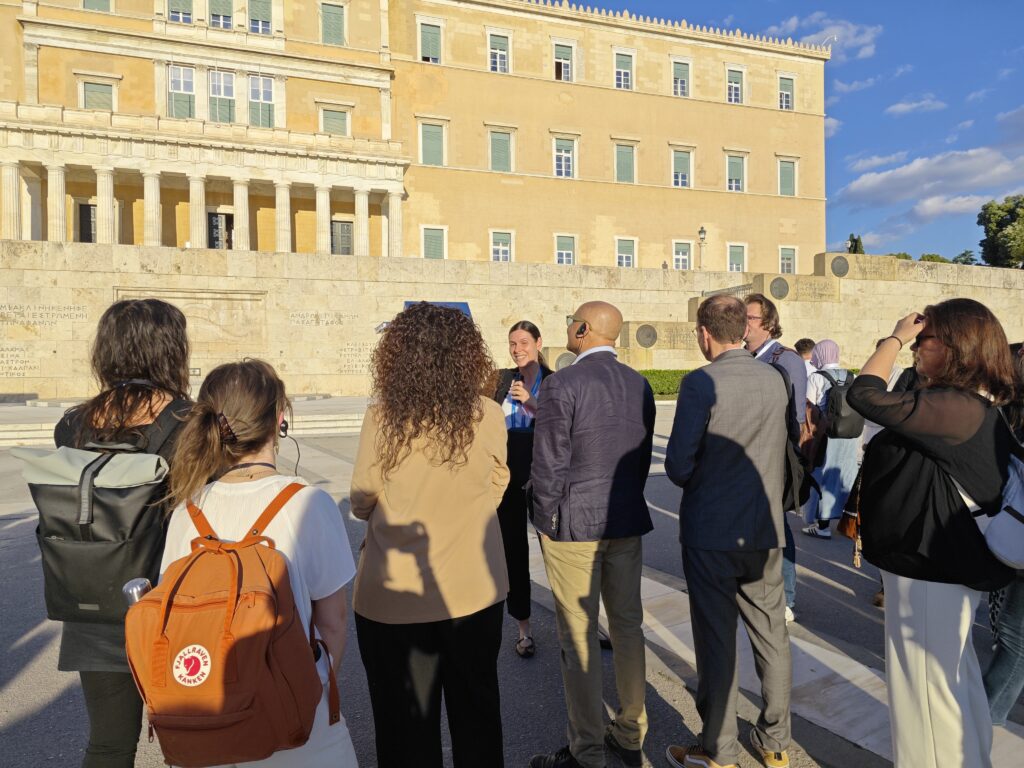
Tour around Athens city centre. Photo: EMarta Castillo/REVOLVE
By combining policy dialogue, project collaboration and community-building activities, the MED Innovation Summit reinforced the role of transnational cooperation in shaping a more sustainable, resilient and circular Mediterranean future.